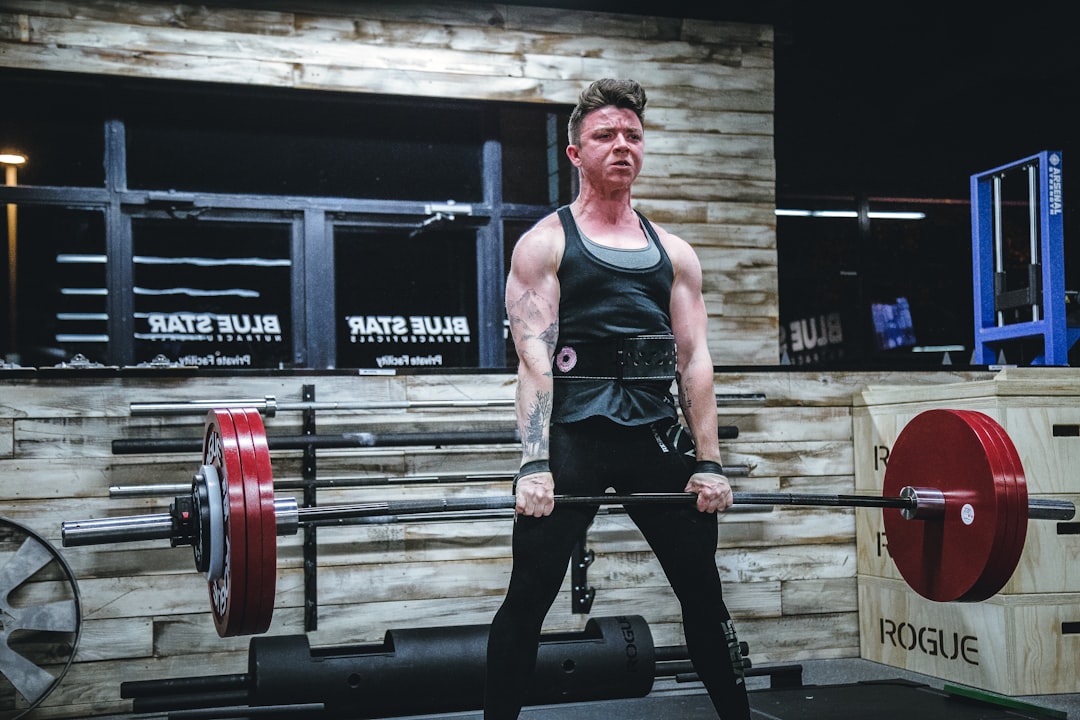
A Beginner Strength Training Plan can feel intimidating when you have not lifted before, but the real job in the first few weeks is simple. I want you to learn the main movement patterns, keep the sessions short enough to repeat, and build a routine that fits a normal week instead of some ideal version of your life. If you want more practical fitness writing like this, I keep a growing archive at CamC Health.
Most beginners do not need a more aggressive plan. They need a clearer one. They need to know which exercises to use, how hard the sets should feel, how to move from one week to the next, and how to keep training from taking over the rest of life. When those pieces are clear, the room stops feeling random. The process starts to feel learnable.
I am writing this for busy adults, people returning after a long gap, and people who want strength without turning the gym into a second job. You do not need a fancy split, a pile of supplements, or a perfect calendar. You need a repeatable structure and a way to make small gains without guessing every time you walk in.
Read this as a working template, not as a rulebook carved in stone. You can adjust the exercise choice, the session length, and the weekly rhythm to fit your schedule. The important part is that the plan stays simple enough to remember and steady enough to follow.
Beginner Strength Training Plan basics
The best place to start is with the movement patterns, not with random exercises you saw in a clip. Nearly every useful program can be built from squat, hinge, push, pull, carry, and brace. Those six patterns cover a lot of ground without making the week feel messy. If you can learn them in a basic form, you can build a strong base for almost any future program.
A squat pattern means you bend at the knees and hips while keeping control. A hinge pattern means the hips move back while the torso stays organized. Pushing and pulling are the upper-body basics. Carrying teaches posture and grip. Bracing teaches you how to stay steady under load. The names sound technical, but the movements are ordinary once you see them in practice.
For a beginner, the main goal is not to impress anyone. It is to look at a movement and feel, I know what that is supposed to do. That feeling matters because it reduces confusion and gives you a way to judge whether a session was useful. You are building pattern recognition as much as muscle.
I also like a simple effort target. Most working sets should end with a couple of reps left in the tank. You should feel like the set was honest, not like a rescue mission. That small reserve helps you keep form cleaner, recover better, and show up for the next session with some energy left.
If you are unsure whether you are doing too much, ask one question. Could I come back in two or three days and do this again without dreading the room? If the answer is yes, the session is probably in a useful zone. If the answer is no, the workload is probably too high for where you are right now.
- Learn movement patterns before chasing exercise variety.
- Choose loads that let you keep position and breathing under control.
- Leave a little energy for the rest of the week.
- Track what you did so the next session feels connected.
That is the basic frame. Simple, repeatable, and not very dramatic. That is exactly why it works for many beginners.
How many days per week really fit a busy life
Three sessions per week is the cleanest starting point for most people. It gives you enough practice to learn the lifts, enough rest to recover, and enough structure to keep the habit alive. If you are very pressed for time, two sessions can still work. If you already enjoy training and your schedule is stable, four sessions may fit. The starting point matters less than the consistency around it.
For a busy adult, the right question is not how many days is ideal in theory. It is how many days you can keep when a meeting runs long, the commute is ugly, or family plans shift. A plan that looks perfect on paper and falls apart every other week is not actually a good plan. A slightly simpler plan that survives normal life is better.
Three days also makes the week easier to understand. You do not have to remember a complicated rotation. You can walk in, do the work, and leave with a clear sense of progress. That matters because beginners often spend too much mental energy deciding what to do. Fewer decisions leaves more energy for the training itself.
A useful rhythm is Monday, Wednesday, and Friday, or any other setup that gives you one rest day between sessions. That spacing helps your body adapt and gives your mind a little room to reset. If your life does not allow that pattern, move the sessions wherever they fit, but keep the breaks sensible.
Here is a simple way to decide:
- Two days if your schedule is chaotic and you need the lowest-friction version.
- Three days if you want the best blend of learning, recovery, and habit building.
- Four days if you already enjoy the routine and your recovery is steady.
For most beginners, the trap is not lack of effort. It is overcommitting and then missing sessions. I would rather see you train three times every week for three months than six times one week and two times the next month. Consistency is the real engine.
Choosing exercises without getting lost in options
The gym can make a beginner feel like every machine is a test. It is not. Most of the equipment in the room is just a different way to load one of the movement patterns. The trick is to choose the version that lets you focus on the actual job of the exercise. If the job is leg strength, pick a leg pattern you can control. If the job is upper-back work, choose a row variation that feels steady from start to finish.
Machines can be very useful here. They reduce balance demands and make it easier to learn effort. Dumbbells can help too because they are easy to set up and easy to adjust. Barbells are great later, but they are not required on day one. A beginner plan should reward learning, not punish it.
I like to think in terms of coverage. In a week, you want at least one squat pattern, one hinge pattern, one push, one pull, and one carry or core drill. You do not need a dozen exercises to make that happen. You need a few solid ones that you can repeat long enough to feel confident.
Here is a practical menu.
- Squat pattern — goblet squat, leg press, split squat, box squat
- Hinge pattern — Romanian deadlift, cable pull-through, dumbbell hinge
- Push pattern — chest press machine, dumbbell press, incline push-up
- Pull pattern — seated row, lat pulldown, one-arm dumbbell row
- Carry or brace — farmer carry, suitcase carry, dead bug, plank variation
Keep the exercise list short enough that you can remember it without checking your phone ten times between sets. If you are swapping exercises every week, you are not really learning the plan. You are starting over every time. Give each main lift enough time to become familiar.
One more thing. A movement should feel stable enough that you can think about the target muscles and your breathing. If all of your attention is going to balance, setup confusion, or fear of dropping the weight, the exercise is probably too complex for that moment. Simpler can be smarter.
Warm-up, setup, and first working sets
Many beginners think the workout starts with the first heavy set. I prefer to think of the workout as starting before that, when you are getting your joints, breathing, and focus in place. A short warm-up does not need to be a whole extra workout. It needs to prepare you for the work you actually came to do.
For most sessions, five to ten minutes is enough. You can walk, cycle, row lightly, or do a few easy bodyweight movements. Then use the first one or two sets of the main lift as ramp-up sets. Those sets are not there to exhaust you. They are there to let your body remember the pattern and your head remember the setup.
I like a three-part warm-up. First, move in a simple way to get the pulse up. Second, do a few lighter reps of the first exercise. Third, pause for a moment and think through the first working set. That moment matters more than people think. The first reps of a session often set the tone for the rest of it.
If a movement feels stiff, do not panic. The point of the warm-up is to make the first work set less awkward, not to turn you into a different person. A little stiffness at the start is normal. The body often wakes up after a few controlled reps.
When I coach beginners in my head, the cues stay simple.
- Set your feet before you grab the weight.
- Take one steady breath before the first rep.
- Move the weight with control, not with panic.
- Stop a set when form starts to drift.
The goal of the warm-up is not to feel tired. The goal is to feel ready. That sounds small, but it changes how the rest of the session goes. A calm setup usually leads to better reps than a rushed one.
A simple workout template you can repeat
Once the patterns are in place, the actual workout can stay very straightforward. I like full-body sessions for beginners because they give you repeated practice and keep the week balanced. You do not need a split that makes the calendar look clever. You need a session you can repeat while the rest of life keeps moving.
Here is a useful three-day structure.
Day A can focus on squat and push. Start with a goblet squat or leg press, then move to a chest press or dumbbell press, then a row, then a carry or plank. That gives you legs, chest, back, and trunk work in one session.
Day B can focus on hinge and pull. Start with a Romanian deadlift or dumbbell hinge, then a lat pulldown or seated row, then a split squat, then a core drill like dead bug. This session shifts the emphasis while still touching the whole body.
Day C can be a slightly lighter mix. Use a squat variation, a push-up or machine press, a different row, and a carry. This keeps the week balanced without making every session feel identical.
For sets and reps, a plain range works well. Two to four working sets is enough for most beginner exercises. Five to eight reps works well for heavier compound lifts. Eight to twelve reps works well for machines and some accessory work. You do not need to force every exercise into the same box. Let the movement guide the range.
Rest between sets should match the demand of the lift. Big compounds may need ninety seconds or a little more. Smaller moves can often move faster. If your breathing is still scrambled and the next set would be sloppy, wait a bit longer. The clock is a guide, not a judge.
What matters most is that the workout feels repeatable. If you leave the session knowing exactly what to do next time, the plan is doing its job.
How to choose the right starting loads
You do not need a dramatic starting weight. Pick a load that lets you finish your target reps with solid control and a little reserve. If the last rep turns into a grind on every set, the weight is probably too heavy for a first block. If the whole session feels too easy, nudge the load up a little next time.
A useful test is simple. Could you have done two more reps if you had to? If yes, that is usually a good place to learn from. If no, back off a little. The first month is about building trust with the movements, not proving how hard you can suffer.
How to progress without guessing every week
Progress is where many beginner plans fall apart. People train for a few sessions, feel a little stronger, and then wonder what comes next. The answer should be easy to see. You need a progression rule that is simple enough to follow without a new decision at every workout.
My favorite beginner method is double progression. Pick a rep range, such as eight to ten. Keep the weight the same until you can hit the top of the range on all your sets with good form. Then raise the load a small amount and go back to the lower end of the range. It is boring in the best possible way. It gives you a repeatable path.
This works because it respects both skill and effort. You are not jumping weight just because the calendar changed. You are earning the next step by showing that the current load is stable. That makes the plan feel less random and more understandable.
You can also progress in other small ways. Add a rep to one set. Add a little weight. Improve the setup. Shorten the time between the first and second rep because you are more organized. Clean reps count. Better breathing counts. A smoother setup counts. Progress is not only about the numbers on the plates.
Logging your sessions is the easiest way to keep this honest. Write down the exercise, the sets, the reps, and the load. It can be a notebook or a phone note. If you skip the log, every session starts to blur together. Then you are relying on memory, which is a poor training tool.
If a lift stalls for two or three sessions, do not assume the exercise is broken. Check sleep, food, stress, and how hard the last week felt. Some weeks are just messy. A sensible beginner plan has room for that.
- Keep the same lift long enough to see a pattern.
- Increase reps before increasing load when the set still feels stable.
- Use small jumps instead of big jumps.
- Log the session so next week has a clear starting point.
Progress is rarely dramatic in the first month. It is usually quiet. One more rep. One cleaner rep. One more confident setup. That quiet progress is the kind that lasts.
Recovery, food, and sleep that support the plan
Training is only one part of the picture. Recovery habits decide how much of the work actually sticks. You do not need a complicated recovery routine. You need enough sleep, enough food, enough hydration, and enough space between hard sessions to show up again with some energy.
Sleep is the simplest lever. If you train while sleeping badly, the next session usually feels flatter and less focused. You do not need perfection. You need a rhythm that gives your body a fair chance. Even a small improvement in sleep regularity can make the week feel easier.
Food matters too. A beginner does not need to micromanage every bite, but regular meals help. Protein at meals, some carbohydrates around training, and enough total food for your activity level can make the whole process feel smoother. If you go into the gym underfed every time, the session is going to feel harder than it should.
Hydration sounds basic because it is. Still, many people are underhydrated by the time they get to the gym. A bottle of water during the day is a simple fix. You do not need anything fancy. You need enough fluid that the session is not starting from behind.
Soreness is not the scorecard. Some good sessions leave little soreness. Some rough sessions leave a lot. Soreness tells you that tissue stress happened. It does not tell you that the program was smart. What matters more is whether you can keep training the next week without feeling wrecked.
A good habit for busy adults is to leave one or two easier days between hard sessions. That gap makes it easier to recover, work, and handle ordinary life. The gym should fit around your life, not replace it.
- Keep a consistent sleep window when possible.
- Eat regular meals with enough protein.
- Drink water across the day.
- Use rest days as part of the plan, not as lost time.
- Judge sessions by repeatability, not by soreness.
If a movement creates sharp pain, a strange joint feeling, or discomfort that does not feel like normal training fatigue, stop that exercise and get qualified eyes on it. That is not a failure. That is a smart adjustment.
Home gym versus commercial gym
People often think they need the perfect environment before they start. That is usually just delay dressed up as planning. You can run a useful beginner plan at home, in a commercial gym, or in a mix of both. The right choice is the one that lowers friction and makes your next session easier to begin.
A commercial gym gives you more equipment and usually makes progression easier. Machines, dumbbells, cables, and racks give you plenty of options. If you like the environment and can get there reliably, it can be a very practical place to learn. You also have a built-in cue that says, now I train.
Home training has a different advantage. It removes travel time and can make it much easier to keep the habit on hectic days. A pair of dumbbells, a bench, a few bands, and enough floor space can cover a lot of beginner work. You do not need a full room of gear to get useful sessions in.
When I compare the two, I look at friction first. Which option gets you started faster? Which option feels less like a project? Which option makes it easiest to do the second and third week, not just the first one? Those questions matter more than the idea of the perfect setup.
Here is a simple way to think about it.
- Gym if you want machine variety, easy loading changes, and more exercise choices.
- Home if you want convenience, short setup time, and fewer excuses.
- Mixed if you can train at home during busy weeks and use the gym when you have more time.
A setup that looks impressive but is annoying to use loses to a smaller setup you can actually repeat. The best equipment is the one you keep using.
Common mistakes that make beginners spin their wheels
Most beginner mistakes are not dramatic. They are small choices that stack up and slow progress. The first one is doing too much too soon. A person feels excited in week one, adds a dozen exercises, and then spends the next week too sore and too tired to repeat the session. That is how momentum gets broken.
The second mistake is changing exercises every few workouts. One week it is a new split squat version, the next week it is a different row, then a new press because someone on social media said it was better. That kind of churn kills learning. You need enough repetition to notice improvement.
The third mistake is chasing exhaustion instead of quality. A hard workout is not automatically a useful one. If the pace is frantic and the form is messy, you might feel cooked without actually getting better at the lifts you need. Better work is often calmer work.
The fourth mistake is copying advanced lifters. Their volume, exercise selection, and recovery habits were built over years. A beginner does not need that complexity. A beginner needs clarity and repeatability. Simple is not a downgrade. Simple is a smarter starting point.
The fifth mistake is waiting for motivation to arrive before training. Motivation is unreliable. The plan needs to be easy enough that you can start even when the day feels flat. That is why the schedule, the exercise list, and the progression rule should all be easy to remember.
- Too many exercises in week one.
- Changing movements before learning them.
- Training so hard that the next session feels awful.
- Copying routines built for advanced lifters.
- Relying on motivation instead of structure.
If you avoid those five traps, you are already ahead of a lot of people who keep restarting from zero.
How to keep the routine alive after month one
After a month or two, the plan should stop feeling novel. That is a good sign. You do not need constant novelty. You need a routine that has become part of your week. The next step is not to make everything harder. It is to make the routine clearer and more personal.
Start by keeping the exercises that gave you the best return. If a movement feels awkward, painful in the bad sense, or hard to set up in a way that fits your body, swap it for a close cousin. But do that with intention, not boredom. Changing a lift should solve a real issue, not just add variety for its own sake.
Then decide what matters most to you over the next block. Maybe you want stronger legs. Maybe you want better upper-back work. Maybe you want a habit that survives a rough schedule. Once the priority is clear, you can give one or two movements a little more attention without turning the whole week upside down.
This is also a good time to use an easier week if the training has been building for several weeks in a row. Lower the loads a bit, keep the movements, and let your body catch up. That easier week is not a step backward. It is often what lets the next block feel better.
The point of the first month is not to become advanced. The point is to become someone who can train regularly without drama. That is a much more valuable milestone than hitting a big number too early.
If you want a simple maintenance checklist, use this:
- Keep three sessions on the calendar when possible.
- Use the same main lifts long enough to learn them.
- Log your loads and reps.
- Sleep enough to show up with some focus.
- Adjust only when the adjustment solves a real problem.
A solid Beginner Strength Training Plan does not need to be exciting every week. It needs to be repeatable, understandable, and honest. If it helps you walk into the room with less guesswork and walk out knowing what comes next, it is doing its job.